
Warning: fopen(/home/virtual/colon/journal/upload/ip_log/ip_log_2025-12.txt): failed to open stream: Permission denied in /home/virtual/lib/view_data.php on line 95 Warning: fwrite() expects parameter 1 to be resource, boolean given in /home/virtual/lib/view_data.php on line 96 Pelvic Floor Rehabilitation to Improve Functional Outcome After a Low Anterior Resection: A Systematic Review
Skip Navigation
Skip to contents

Ann Coloproctol : Annals of Coloproctology

OPEN ACCESS
SEARCH
Search

Articles

Page Path
HOME > Ann Coloproctol > Volume 30(3); 2014 > Article
Review
Pelvic Floor Rehabilitation to Improve Functional Outcome After a Low Anterior Resection: A Systematic Review
Wilhelmina S Visser, Wouter W te Riele, Djamila Boerma, Bert van Ramshorst, Henderik L van Westreenen1
Annals of Coloproctology 2014;30(3):109-114.
DOI: https://doi.org/10.3393/ac.2014.30.3.109
Published online: June 23, 2014

Department of Surgery, St. Antonius Hospital, Nieuwegein, The Netherlands.

1Department of Surgery, Isala Clinics, Zwolle, The Netherlands.

Correspondence to: Henderik L van Westreenen, M.D. Department of Surgery, Isala Clinics, Zwolle PO box 10400, 8000 GK Zwolle, The Netherlands. Tel: +31-38-424-2787, Fax: +31-38-424-7720, h.l.van.westreenen@isala.nl
• Received: May 10, 2014   • Accepted: May 21, 2014

© 2014 The Korean Society of Coloproctology

This is an open-access article distributed under the terms of the Creative Commons Attribution Non-Commercial License (http://creativecommons.org/licenses/by-nc/3.0/) which permits unrestricted non-commercial use, distribution, and reproduction in any medium, provided the original work is properly cited.

prev next
  • 12,099 Views
  • 235 Download
  • 91 Web of Science
  • 104 Crossref
  • 114 Scopus
  • Purpose
    Impaired functional outcome is common after a low anterior resection (LAR). Pelvic floor rehabilitation (PFR) might improve functional outcome after a LAR. The aim of this systematic review is to evaluate the effectiveness of PFR in improving functional outcome.
  • Methods
    PubMed, Embase, and the Cochrane Library were searched using the terms fecal incontinence, colorectal neoplasm/surgery, LAR, rectal cancer, anterior resection syndrome, bowel habit, pelvic floor, training, therapy, physical therapy, rehabilitation and biofeedback. Of the 125 identified records, 5 articles were included.
  • Results
    The 5 included studies reported on 321 patients, of which 286 patients (89%) underwent pelvic floor training. Three studies included patients with anterior resection syndrome after a LAR while the remaining studies included a series of patients after a LAR. Functional outcome was mostly assessed by using the Wexner incontinence scale. Quality of life was assessed in one study, and in three studies, rectal manometry was performed. After PFR, the functional outcome was improved in four studies, as was the quality of life.
  • Conclusion
    This systematic review demonstrated that PFR is useful for improving the functional outcome after a LAR. The data are extracted from studies of limited quality, but the available evidence points to the effectiveness of the procedure.
Treatment of rectal cancer has been improved by the introduction of the total mesorectal excision (TME) technique combined with preoperative radiotherapy and neoadjuvant radiochemotherapy [1]. The primary goal of the surgery is to remove all tumor tissue to achieve the best oncological result [2]. Sphincter-preserving surgery with restoration of bowel continuity to avoid a permanent colostomy is feasible in 50%-80% of these patients [3]. A restorative procedure to avoid a permanent stoma is generally assumed to be preferable in terms of quality of life (QoL). However, differences in QoL between abdominoperineal resections and anterior resections are currently not established [4]. An explanation for the equivalent QoL might be the defecation disorders after sphincter-preserving surgery.
Besides oncologic results and traditional clinical outcome measures such as morbidity and mortality, functional outcome has become an important parameter for defining surgical performance after a low anterior resection (LAR) [5]. That up to 90% of such patients will subsequently have a change in bowel habit, including fecal incontinence (FI), increased bowel frequency and emptying difficulties, is widely accepted. This wide spectrum of symptoms after a resection and reconstruction of the rectum has been termed anterior resection syndrome (ARS) [3]. Previous studies revealed preoperative radiotherapy and the distance of the tumor to the anal verge as risk factors for FI after a LAR [6]. Especially, irradiation of the anal sphincter for a low rectal tumor may impair the functional results. The results from the Dutch TME-trial demonstrated that 39% of the patients who had a TME alone and 62% of those treated with surgery and preoperative radiotherapy were incontinent at 5 years [7].
There are currently no specific treatment options for ARS or FI. Pelvic floor rehabilitation (PFR), including pelvic floor muscle training (PFMT), biofeedback (BF) training and rectal balloon training (RBT), has been accepted as a standard technique for the treatment of FI [8, 9]. PFMT aims to restore muscular strength, coordination and the timing of contractions. With BF, the patient gets information about the activity of the pelvic floor muscles by way of a visual display. RBT is used to increase the patient's ability to perceive the rectal distension. PFR interventions are noninvasive and inexpensive, require no sophisticated equipment and have hardly any adverse effects [10]. The aim of this systematic review is to evaluate the effectiveness of PFR in improving functional outcome after sphincter-preserving surgery for rectal cancer.
A systematic literature search with predefined search terms was performed using the databases of PubMed, Embase, and the Cochrane Library to identify relevant articles published from 1970 to December 2013. The following keywords were used: fecal incontinence, colorectal neoplasm/surgery, low anterior resection, rectal cancer, pelvic floor, training, therapy, physical therapy, rehabilitation and biofeedback. The search strategy included the medical subject heading (MeSH) terms: fecal incontinence AND colorectal neoplasm/surgery AND (anterior resection syndrome OR bowel habit OR pelvic floor OR physical therapy OR biofeedback). A librarian assisted with the electronic search. A reference list of key articles and reviews was searched by hand to identify additional articles, which were pursued if relevant. Two reviewers (W.S.V., H.L.vW) independently screened the search results and identified the relevant articles. In event of disagreement, a consensus was reached through discussion among the reviewers.
Inclusion criteria for searching were reviews, cohort studies, case-control studies and randomized trials evaluating pelvic floor and/or biofeedback training for the treatment of functional disorders after sphincter-preserving surgery for rectal cancer. Only original articles in English, German or French were considered. All other study designs were excluded.
Two reviewers independently used a standard form to extract data from each study. The data included year of submission, country, inclusion period, number of patients, inclusion criteria, proportion of patients treated with radiotherapy, level of anastomosis from the dentate line, clinical evaluation of FI, stool frequency, description of the technique of PFR, results of functional outcome, rectal manometry and QoL. The data analysis was performed according to the Preferred Reporting Items for Systematic Reviews and Meta-Analyses (PRISMA) statement [11]. The methodological quality of the included studies was assessed by using the Methodological Index for Non-randomized Studies (MINORS) scale (maximum 24 points for comparative studies) [12]. Meta-analysis was directed towards identification of differences in incontinence scores between excercised and nonexcercised patients. Heterogeneity was tested using the I2 test (Review Manager, ver. 5.2., The Nordic Cochrane Centre, The Cochrane Collaboration, Copenhagen, Denmark). An I2 test > 50% means major heterogeneity.
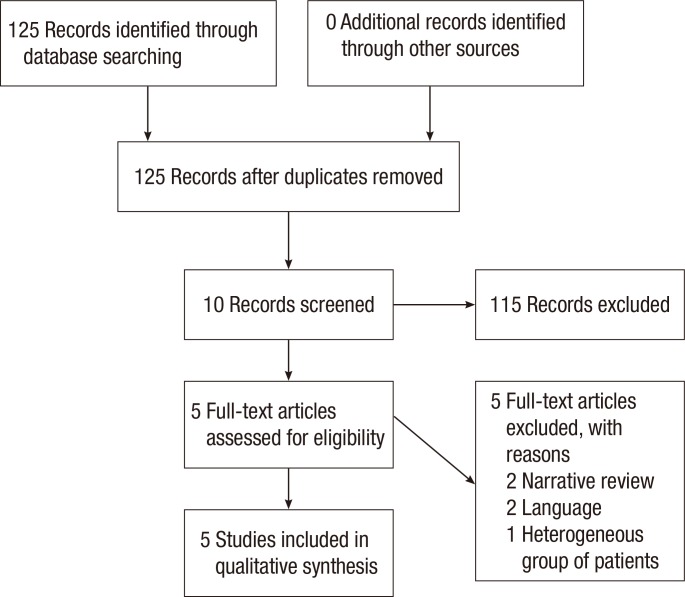
The search strategy identified 125 possibly relevant articles. Of these, 115 were excluded as they were irrelevant (Fig. 1). Most studies reported data regarding functional outcome after rectal cancer surgery regardless of PFR, and others evaluated the role of PFR in the treatment of FI not related to rectal surgery. Ten articles were retrieved for detailed examination and reference checking. Five of these were excluded as they were narrative reviews o were written in exceptional languages (Russian, Chinese) [13, 14]. One study described a heterogeneous patient group including segmental colectomies, J-pouch anal anastomoses and anterior resections [15]. The five articles that met the inclusion criteria were reviewed (Table 1).
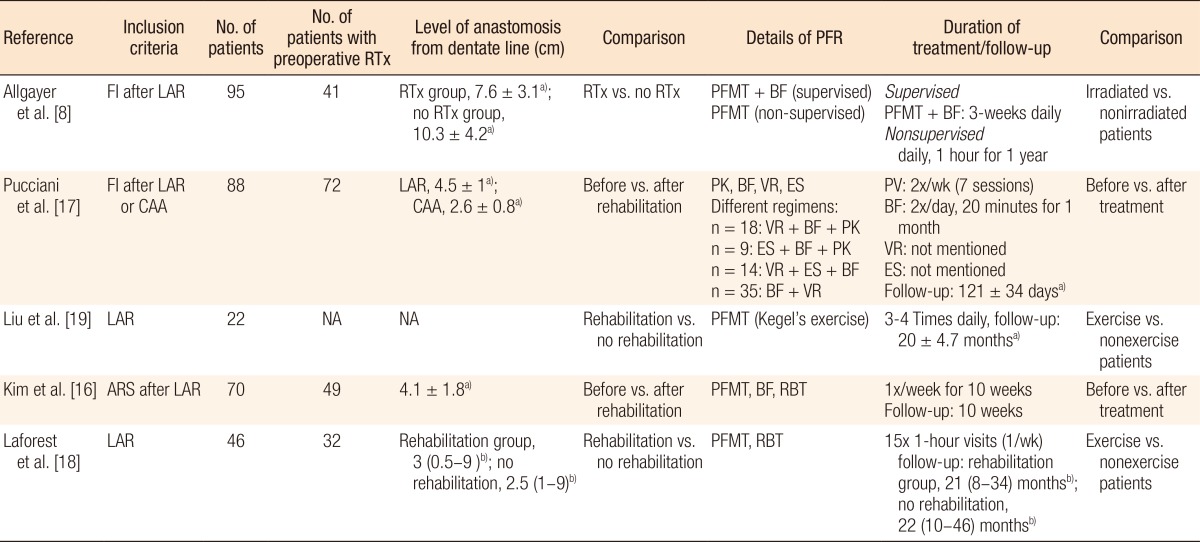
The 5 studies were published between 2005 and 2012, and the MINORS scale varied from 11 to 17. Three studies [8, 16, 17] included a group of patients with FI or ARS after a LAR and coloanal anastomosis while the remaining studies included patients not specifically suffering from FI after a LAR (Table 2). Most patients were treated with preoperative radiotherapy, and except for one study which included a higher anastomosis, the mean level of the anastomosis was below 5 cm from the dentate line [8]. Functional outcome was mostly assessed by using the Wexner incontinence scale (WIS) [16, 17, 18], and anorectal evaluation by manometry was performed in three studies (Tables 3, 4) [8, 16, 17]. QoL was assessed in one study by using the fecal incontinence and quality of life (FIQL) questionnaire and the Short Form 36 questionnaire (SF-36) [18], and stool frequency was assessed in three studies [16, 18, 19]. In two studies, a cohort of patients was assessed regarding functional outcome before and after a rehabilitation program [16, 17], and two other studies compared groups of patients with and without PFR [18, 19]. The remaining study evaluated the role of PFR in irradiated and non-irradiated patients (Table 2) [8].
A total of 321 patients was included in the selected studies. Of these, 286 patients (89%) underwent pelvic floor training (Table 2). Baseline characteristics of the patients included in the studies were relative homogeneity, including gender and type of surgery. The mean ages of the patients varied from 55.0 years to 67.0 years. The PFR was different for all the studies (Table 2). All studies did PFMT, and four studies added BF or RBT to their training program. One study had a tailored program for each patient, leading to four different regimens [17]. Another study used PFMT as the only treatment [19]. The duration of PFR was one year or longer in two studies; the training period in the other studies varied from 10 to 17 weeks (Table 2).
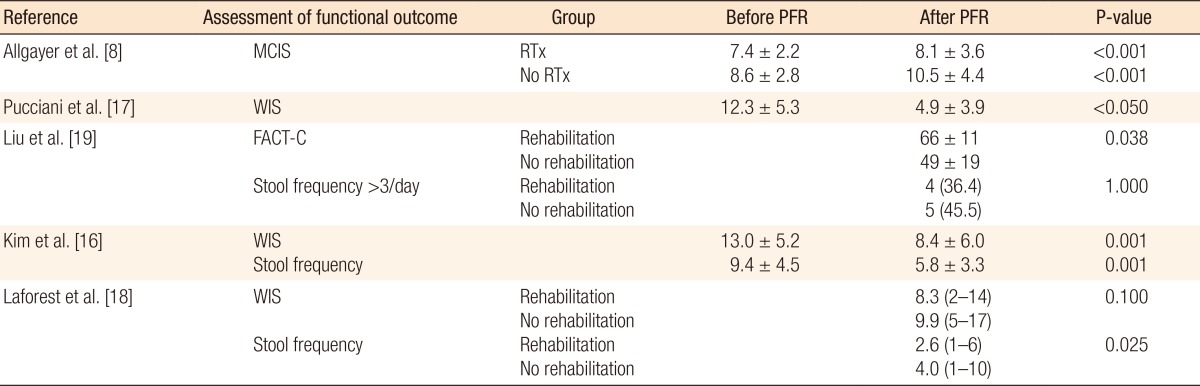
The incontinence score (WIS, modified Cleveland incontinence score [MCIS], functional assessment of cancer therapy-colorectal questionnaire) was significantly improved after PFR in four studies [8, 16, 17, 19], and in one study no significant reduction of the WIS was observed [18]. One study showed a significantly greater improvement in WIS when BF therapy was started more than 18 months after surgery [16]. Stool frequency was decreased after PFR in two studies [16, 18]. QoL demonstrated improved vitality and mental functioning on the SF-36 questionnaire, and rehabilitated patients suffered less from depression and had a better self-perception on the FIQL scale [18].
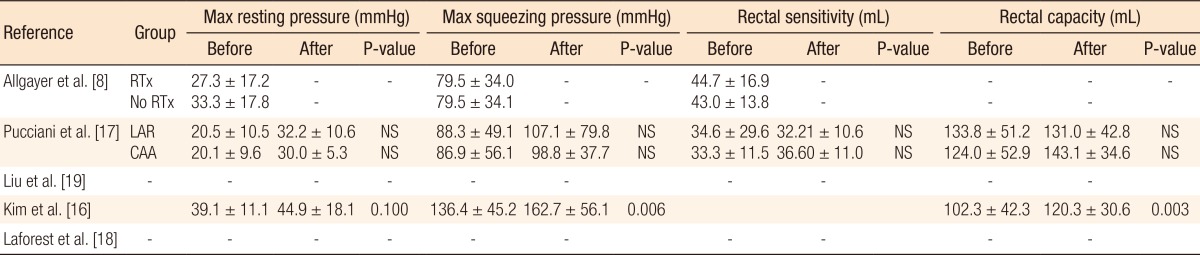
One study demonstrated improved functional outcome based on anorectal pressures and rectal capacity (Table 4) [16]. Two other studies [8, 17] using anorectal manometry did not show any differences in the postrehabilitative rectal pressures. Pooling of the data was only possible with the data of Kim et al. [16] and Pucciani et al. [17] Both studies evaluated the functional outcome as expressed by the WIS before and after PFR. However, the I2 was 82%, and reliable pooling of the data was not reasonable due to a major heterogeneity.
This systematic review demonstrated that the use of PFR is useful for improving functional outcome after a LAR. Most included studies showed an improvement regarding continence, stool frequency and QoL. The available data were extracted from studies of limited quality, and pooling of the data was not possible due to heterogeneity of the used PFR protocols and the different FI scoring systems.
The included studies showed an improvement in FI based upon the MCIS and the WIS in patients with proven FI or ARS [8, 16, 17]. The best designed study, which was by Laforest et al. [18], did not show an improvement of the WIS, but that study included all patients after a LAR, and patients were divided into an excercised and nonexcercised group. Therefore, we would not recommend the routine use of PFR in all patients who undergo a LAR but only in patients with symptoms of FI or ARS, who might benefit most from PFR. QoL was assessed in only one study, and two questionnaires were used. Reporting the severity of ARS or FI and its impacts on QoL are of great relevance. Consistent assessment of QoL by using common definitions is necessary in future trials.
The different PFR protocols and durations of training hampered the drawing of solid conclusions from this systematic review. Furthermore, no information was available on a subset of patients who might benefit most from PFR, e.g., patients with very low colorectal anastomoses, patients with preoperative radiotherapy, or women with a history of vaginal delivery. Therefore, upcoming trials should provide this information in their patient characteristics.
Several scoring systems, such as the WIS, the MCIS, the Rockwood Fecal Incontinence Severity Index or the St Mark's Fecal Incontinence Grading Score, were used to assess the functional outcome after rectal cancer surgery [20, 21]. Because FI is a major stressor in life, the Fecal Incontinence QoL scale is a condition specific QoL questionnaire and is commonly used for the assessment of ARS [22]. All of these scoring systems are very useful for assessing FI, but a meta-analysis of the several studies was not possible due to the different scorings scales. Therefore, a symptom-based scoring system for bowel dysfunction after a LAR for rectal cancer was recently developed [20]. This Low Anterior Resection Syndrome Score is related to QoL, and with it, results from different future trials can be compared. This scoring system has been validated in several European countries should the LARS score be implemented in all upcoming trials [23].
The studies included in this systematic review focused mostly on FI and stool frequency. However, the spectrum of symptoms after a LAR (ARS) included also incontinence for flatus, clustering and urgency. Specialists tend to overestimate the impact of incontinence for liquid stool and frequent bowel movements, but clustering and urgency are the symptoms that patients find the most bothersome [24]. Therefore, rectal cancer surgeons should be aware of the broad spectrum of symptoms of ARS and of the symptoms that truly matter to the patient.
Besides PFR, more therapies, such as colonic irrigation and sacral nerve stimulation, are available to treat ARS [3, 25, 26]. Both therapies can lead to an improvement in functional outcome, but the patients who might benefit from these invasive therapies cannot be selected on the bases of evidence-based conclusions. Furthermore, antidiarrheal medication, food and liquid restriction are still useful for the treatment of patients with ARS.
Several questions have to be answered in future trials if the exact role of PFR after rectal surgery is to be investigated. First, should all patients after a LAR have PFR as a routine part of their treatment? Second, what type of rehabilitation protocol and what duration of therapy have to be investigated to create uniformity in the treatment? Finally, if PFR is not necessary as a routine treatment after a LAR, which patients with ARS will benefit most from PFR?
In conclusion, this systematic review demonstrated that the use of PFR is useful for improving functional outcome after a LAR. Still, solid evidence for the routine use of PFR after a LAR to improve functional outcome is lacking. Well-designed studies using uniformly-adopted scoring systems and proper selection of patients based upon reproducible criteria are needed.

No potential conflict of interest relevant to this article was reported.

  • 1. Kapiteijn E, Marijnen CA, Nagtegaal ID, Putter H, Steup WH, Wiggers T, et al. Preoperative radiotherapy combined with total mesorectal excision for resectable rectal cancer. N Engl J Med 2001;345:638–646. ArticlePubMed
  • 2. Lindgren R, Hallbook O, Rutegard J, Sjodahl R, Matthiessen P. Does a defunctioning stoma affect anorectal function after low rectal resection? Results of a randomized multicenter trial. Dis Colon Rectum 2011;54:747–752. ArticlePubMed
  • 3. Bryant CL, Lunniss PJ, Knowles CH, Thaha MA, Chan CL. Anterior resection syndrome. Lancet Oncol 2012;13:e403–e408. ArticlePubMed
  • 4. Cornish JA, Tilney HS, Heriot AG, Lavery IC, Fazio VW, Tekkis PP. A meta-analysis of quality of life for abdominoperineal excision of rectum versus anterior resection for rectal cancer. Ann Surg Oncol 2007;14:2056–2068. ArticlePubMed
  • 5. Bloemen JG, Visschers RG, Truin W, Beets GL, Konsten JL. Long-term quality of life in patients with rectal cancer: association with severe postoperative complications and presence of a stoma. Dis Colon Rectum 2009;52:1251–1258. ArticlePubMed
  • 6. Lange MM, van de Velde CJ. Faecal and urinary incontinence after multimodality treatment of rectal cancer. PLoS Med 2008;5:e202.ArticlePubMedPMC
  • 7. Peeters KC, van de Velde CJ, Leer JW, Martijn H, Junggeburt JM, Kranenbarg EK, et al. Late side effects of short-course preoperative radiotherapy combined with total mesorectal excision for rectal cancer: increased bowel dysfunction in irradiated patients--a Dutch colorectal cancer group study. J Clin Oncol 2005;23:6199–6206. ArticlePubMed
  • 8. Allgayer H, Dietrich CF, Rohde W, Koch GF, Tuschhoff T. Prospective comparison of short- and long-term effects of pelvic floor exercise/biofeedback training in patients with fecal incontinence after surgery plus irradiation versus surgery alone for colorectal cancer: clinical, functional and endoscopic/endosonographic findings. Scand J Gastroenterol 2005;40:1168–1175. ArticlePubMed
  • 9. Lundby L, Duelund-Jakobsen J. Management of fecal incontinence after treatment for rectal cancer. Curr Opin Support Palliat Care 2011;5:60–64. ArticlePubMed
  • 10. Bols EM, Berghmans BC, Hendriks EJ, de Bie RA, Melenhorst J, van Gemert WG, et al. A randomized physiotherapy trial in patients with fecal incontinence: design of the PhysioFIT-study. BMC Public Health 2007;7:355.ArticlePubMedPMC
  • 11. Liberati A, Altman DG, Tetzlaff J, Mulrow C, Gotzsche PC, Ioannidis JP, et al. The PRISMA statement for reporting systematic reviews and meta-analyses of studies that evaluate healthcare interventions: explanation and elaboration. BMJ 2009;339:b2700.ArticlePubMedPMC
  • 12. Slim K, Nini E, Forestier D, Kwiatkowski F, Panis Y, Chipponi J. Methodological index for non-randomized studies (minors): development and validation of a new instrument. ANZ J Surg 2003;73:712–716. ArticlePubMed
  • 13. Du P, Zi SM, Weng ZY, Chen W, Chen Y, Cui L. Biofeedback therapy for fecal incontinence in patients with mid or low rectal cancer after restorative resection. Zhonghua Wei Chang Wai Ke Za Zhi 2010;13:580–582. PubMed
  • 14. Dubovyi VA. Biofeedback training in the treatment of anterior resection syndrome. Lik Sprava 2006;(5-6): 55–60.
  • 15. Bartlett L, Sloots K, Nowak M, Ho YH. Biofeedback therapy for symptoms of bowel dysfunction following surgery for colorectal cancer. Tech Coloproctol 2011;15:319–326. ArticlePubMed
  • 16. Kim KH, Yu CS, Yoon YS, Yoon SN, Lim SB, Kim JC. Effectiveness of biofeedback therapy in the treatment of anterior resection syndrome after rectal cancer surgery. Dis Colon Rectum 2011;54:1107–1113. ArticlePubMed
  • 17. Pucciani F, Ringressi MN, Redditi S, Masi A, Giani I. Rehabilitation of fecal incontinence after sphincter-saving surgery for rectal cancer: encouraging results. Dis Colon Rectum 2008;51:1552–1558. ArticlePubMed
  • 18. Laforest A, Bretagnol F, Mouazan AS, Maggiori L, Ferron M, Panis Y. Functional disorders after rectal cancer resection: does a rehabilitation programme improve anal continence and quality of life? Colorectal Dis 2012;14:1231–1237. ArticlePubMed
  • 19. Liu CH, Chen CH, Lee JC. Rehabilitation exercise on the quality of life in anal sphincter-preserving surgery. Hepatogastroenterology 2011;58:1461–1465. ArticlePubMed
  • 20. Emmertsen KJ, Laurberg S. Low anterior resection syndrome score: development and validation of a symptom-based scoring system for bowel dysfunction after low anterior resection for rectal cancer. Ann Surg 2012;255:922–928. ArticlePubMed
  • 21. Rockwood TH. Incontinence severity and QOL scales for fecal incontinence. Gastroenterology 2004;126(1 Suppl 1): S106–S113. ArticlePubMed
  • 22. Bols EM, Hendriks HJ, Berghmans LC, Baeten CG, de Bie RA. Responsiveness and interpretability of incontinence severity scores and FIQL in patients with fecal incontinence: a secondary analysis from a randomized controlled trial. Int Urogynecol J 2013;24:469–478. ArticlePubMed
  • 23. Juul T, Ahlberg M, Biondo S, Emmertsen KJ, Espin E, Jimenez LM, et al. International validation of the low anterior resection syndrome score. Ann Surg 2014;259:728–734. ArticlePubMedPMC
  • 24. Chen TY, Emmertsen KJ, Laurberg S. Bowel dysfunction after rectal cancer treatment: a study comparing the specialist's versus patient's perspective. BMJ Open 2014;4:e003374. ArticlePubMedPMC
  • 25. Koch SM, Rietveld MP, Govaert B, van Gemert WG, Baeten CG. Retrograde colonic irrigation for faecal incontinence after low anterior resection. Int J Colorectal Dis 2009;24:1019–1022. ArticlePubMed
  • 26. Matzel KE. Sacral nerve stimulation for faecal incontinence: its role in the treatment algorithm. Colorectal Dis 2011;13(Suppl 2): 10–14. ArticlePubMed
Fig. 1
Preferred reporting items for systematic reviews and meta-analyses diagram showing selection of articles for review.
ac-30-109-g001.jpg
Table 1
Methodological characteristics of individual studies evaluating pelvic floor rehabilitation after a low anterior resection
ac-30-109-i001.jpg
Table 2
Clinical characteristics of individual studies evaluating pelvic floor rehabilitation after a low anterior resection
ac-30-109-i002.jpg

Values are presented as a)mean ± standard deviation or b)mean (range).

RTx, radiotherapy; PFR, pelvic floor rehabilitation; FI, fecal incontinence; LAR, low anterior resection; PFMT, pelvic floor muscle training; BF, biofeedback training; CAA, coloanal anastomosis; VR, volumetric rehabilitation; ES, electrostimulation; PK, pelviperineal kinesitherapy; NA, not applicable; ARS, anterior resection syndrome; RBT, rectal balloon training.

Table 3
Results of functional outcome from studies evaluating pelvic floor rehabilitation after a low anterior resection
ac-30-109-i003.jpg

Values are presented as mean±standard deviation, number (%), or mean (range).

PFR, pelvic floor rehabilitation; MCIS, modified Cleveland incontinence score; RTx, radiotherapy; WIS, Wexner incontinence scale; FACT-C, functional assessment of cancer therapy-colorectal questionnaire.

Table 4
Results of manometry from studies evaluating pelvic floor rehabilitation after a low anterior resection
ac-30-109-i004.jpg

Values are presented as mean±standard deviation.

RTx, radiotherapy; LAR, low anterior resection; CAA, coloanal anastomosis; NS, not significant.

Figure & Data

References

    Citations

    Citations to this article as recorded by  
    • Pelvic floor muscle training for the prevention and management of low anterior resection syndrome in patients with rectal cancer: An evidence-based summary
      Meirong Hong, Wei Yu, Yating Gao, Bei Pei, Ji Chen, Yan Lou
      Asia-Pacific Journal of Oncology Nursing.2025; 12: 100620.     CrossRef
    • Diagnosis and Treatment of Low Anterior Resection Syndrome
      Masaaki Miyo, Emi Akizuki, Koichi Okuya, Ai Noda, Masayuki Ishii, Ryo Miura, Momoko Ichihara, Maho Toyota, Kohei Okamoto, Tatsuya Ito, Yuji Akiyama, Ichiro Takemasa
      Journal of the Anus, Rectum and Colon.2025; 9(1): 1.     CrossRef
    • Pathway Of Low Anterior Resection syndrome (LARS) relief after Surgery (POLARiS): protocol for an international, open-label, multi-arm, phase 3 randomised superiority trial within a cohort, with economic evaluation, process evaluation and qualitative sub-
      Julie Croft, Emily Farrow, Alexandra Harriet Coxon-Meggy, Katie Gordon, Neil Corrigan, Hannah Mather, Deborah D Stocken, Megan Dale, Huey Yi Chong, Judith White, Laura Knight, Alun Meggy, Christina Lloydwin, Betty Tan, Ashley Douglas, Ralph Powell, Julie
      BMJ Open.2025; 15(2): e092612.     CrossRef
    • Optimal interventions for low anterior resection syndrome: Bayesian network meta-analysis of randomized controlled trials
      M. Yu, Y. Liu, N. Li, J. Xu, H. Zhang, F. Li, H. Chen, B. Li
      Techniques in Coloproctology.2025;[Epub]     CrossRef
    • Evaluation of pelvic floor rehabilitation in the prevention of low anterior resection syndrome: Study protocol of the CONTICARE trial
      Alexandra Poinas, Noémie Périard, Solène Schirr‐Bonnans, Jean‐Benoit Hardouin, Valery‐Pierre Riche, Odile Cormerais, Michel Guérineau, Guy Valancogne, Antoine Hamy, Mehdi Ouaissi, Yannick Tourreau, Jeremie H Lefevre, Abdelli Amar, Emeric Abet, Jean‐Michel
      Colorectal Disease.2025;[Epub]     CrossRef
    • Treatment options for postoperative faecal incontinence after colorectal surgery
      Conor Thomas Hamilton, Oonagh McCloy
      British Journal of Community Nursing.2025; 30(Sup4a): S12.     CrossRef
    • Progress in diagnosis and treatment of postoperative low anterior resection syndrome
      Wan-Jing Diao, Yi Ji, Jie-Ge Huo
      World Chinese Journal of Digestology.2025; 33(6): 448.     CrossRef
    • The Landscape of Pelvic Floor Rehabilitation: A Bibliometric Analysis
      Jie Hao, Zixuan Yao, Andréas Remis, Xin Yu, Yuxiao Sun
      International Urogynecology Journal.2025;[Epub]     CrossRef
    • Evaluating transanal irrigation for alleviating symptoms of low anterior resection syndrome post rectal cancer surgery: A meta-analysis
      Ting-Kuang Wang, Chien-Hsin Chen, Yi-No Kang, Chiehfeng Chen, Kee-Hsin Chen
      Surgery.2025; 185: 109532.     CrossRef
    • A 2-year prospective study on the evolution of Low Anterior Resection Syndrome (LARS) following rectal cancer surgery
      L. Lauwereins, A. D’Hoore, E. Coeckelberghs, S. Fieuws, A. Wolthuis, G. Bislenghi, Y. Van Molhem, B. Van Geluwe, L. Debrun, N. Devoogdt, A. De Groef, A. Asnong, I. Geraerts
      International Journal of Colorectal Disease.2025;[Epub]     CrossRef
    • Challenges in evaluating pelvic floor physiotherapy based strategies in low anterior resection syndrome: a systematic review and qualitative analysis
      Lauren J. Lambrineas, Henry G. Brock, Hwa Ian Ong, Santha Tisseverasinghe, Emma Carrington, Alexander Heriot, Adele Burgess, David Proud, Helen Mohan
      Colorectal Disease.2024; 26(2): 258.     CrossRef
    • The Effect of a Temporary Stoma on Long-term Functional Outcomes Following Surgery for Rectal Cancer
      Sanne J. Verkuijl, Jara E. Jonker, Edgar J.B. Furnée, Wendy Kelder, Christiaan Hoff, Daniel A. Hess, Fennie Wit, Ronald J. Zijlstra, Monika Trzpis, Paul M.A. Broens
      Diseases of the Colon & Rectum.2024; 67(2): 291.     CrossRef
    • The effectiveness of physiotherapy interventions on fecal incontinence and quality of life following colorectal surgery: a systematic review and meta-analysis of randomized controlled trials
      Ming Yan Pun, Pak Ho Leung, Tsz Ching Chan, Chunn Pang, Kin Hei Chan, Priya Kannan
      Supportive Care in Cancer.2024;[Epub]     CrossRef
    • Treatment of anterior resection syndrome: A systematic review and network meta-analysis
      Lu Zhou, Zhengyang Zhang, Ling Wang
      European Journal of Surgical Oncology.2024; 50(6): 108336.     CrossRef
    • Pelvic Floor Physical Therapy Prehabilitation (PrePFPT) for the prevention of low anterior resection syndrome
      Nathan A. Coppersmith, Kurt S. Schultz, Andrew C. Esposito, Kimberly Reinhart, Emily Ray, Ira L. Leeds, Haddon J. Pantel, Vikram B. Reddy, Walter E. Longo, Anne K. Mongiu
      Surgical Oncology Insight.2024; 1(4): 100097.     CrossRef
    • Application of pelvic floor rehabilitation in patients with colorectal cancer: a scoping review
      Lu Zhou, Changkun Zhong, Yuanyuan Su, Zhengyang Zhang, Ling Wang
      Techniques in Coloproctology.2024;[Epub]     CrossRef
    • Guideline for the assessment and management of gastrointestinal symptoms following colorectal surgery—A UEG/ESCP/EAES/ESPCG/ESPEN/ESNM/ESSO collaboration. Part I—Sequelae to oncological diseases
      Anke H. C. Gielen
      United European Gastroenterology Journal.2024; 12(10): 1489.     CrossRef
    • Transanal Irrigation in Patients with Low Anterior Resection Syndrome After Rectal-Sphincter-Preserving Surgery for Oncological and Non-Oncological Disease: A Systematic Review
      Andrea Morini, Massimiliano Fabozzi, Magda Zanelli, Francesca Sanguedolce, Andrea Palicelli, Alfredo Annicchiarico, Candida Bonelli, Maurizio Zizzo
      Surgical Techniques Development.2024; 13(4): 409.     CrossRef
    • Management of treatment‐related sequelae following colorectal cancer
      Susanne Haas, Anette Højer Mikkelsen, Camilla Jensenius Skovhus Kronborg, Birthe T. Oggesen, Pia F. Møller, Janne Fassov, Nina Abild Frederiksen, Marianne Krogsgaard, Charlotte Graugaard‐Jensen, Lise Ventzel, Peter Christensen, Katrine Jøssing Emmertsen
      Colorectal Disease.2023; 25(3): 458.     CrossRef
    • The Effectiveness of a Self-management Program of Bowel Dysfunction in Patients With Mid and Low Rectal Cancer After Sphincter-Preserving Surgery
      Cong Li, Zhao-Yu Li, Qian Lu, Yu-Jie Zhou, Xue-Ying Qin, Ai-Wen Wu, Dong Pang
      Cancer Nursing.2023; 46(1): 67.     CrossRef
    • A Randomized Controlled Clinical Trial of Transanal Irrigation Versus Conservative Treatment in Patients With Low Anterior Resection Syndrome After Rectal Cancer Surgery
      Emil H.A. Pieniowski, Charlotta M. Bergström, Caroline A.M. Nordenvall, Karin S. Westberg, Asif M. Johar, Susanne F. Tumlin Ekelund, Kristina R. Larsson, Klas J. Pekkari, Gabriella C. Jansson Palmer, Pernilla Lagergren, Mirna Abraham-Nordling
      Annals of Surgery.2023; 277(1): 30.     CrossRef
    • Effectiveness of Pelvic Floor Muscle Training for Patients Following Low Anterior Resection
      Young Man Kim, Eui Geum Oh
      Journal of Wound, Ostomy & Continence Nursing.2023; 50(2): 142.     CrossRef
    • Low anterior resection syndrome
      Seung‐Bum Ryoo
      Annals of Gastroenterological Surgery.2023; 7(5): 719.     CrossRef
    • Low anterior resection syndrome
      Matthew C. Hernandez, Paul Wong, Kurt Melstrom
      Journal of Surgical Oncology.2023; 127(8): 1271.     CrossRef
    • Incidencia y manejo fisioterápico del síndrome de resección anterior bajo
      M.J. Escribano Martínez, J.D. Turiño-Luque
      Fisioterapia.2023; 45(6): 326.     CrossRef
    • Clinical Management of Low Anterior Resection Syndrome: Review of the Current Diagnosis and Treatment
      Ruijia Zhang, Wenqin Luo, Yulin Qiu, Fan Chen, Dakui Luo, Yufei Yang, Weijing He, Qingguo Li, Xinxiang Li
      Cancers.2023; 15(20): 5011.     CrossRef
    • Acupuncture for Rectal Cancer Patients with Low Anterior Resection Syndrome: A Mixed Method Pilot Study Protocol
      Ming Yang, Honglin Jiang, Lin Xu, Qiaoli Zhang, Xun Li, Liu Han, Yudong Bao, Lu Yang, Mi Zhang, Lihua Zheng, Ningyuan Liu, Jianping Liu, Jinchang Huang
      Perspectives on Integrative Medicine.2023; 2(3): 195.     CrossRef
    • Low Anterior Resection Syndrome: Predisposing Factors and Treatment
      Richard Garfinkle, Marylise Boutros
      Surgical Oncology.2022; 43: 101691.     CrossRef
    • A national survey of oncology physiotherapy services for cancer survivors in Australia
      Daniel A. Shipton, Amy M. Dennett, Alesha M. Sayner, Clarice Y. Tang
      Asia-Pacific Journal of Clinical Oncology.2022;[Epub]     CrossRef
    • Patienten mit Uro- und Kolostoma in der Rehabilitation
      Jürgen Körber, Wilfried Hoffmann
      Der Onkologe.2022; 28(3): 203.     CrossRef
    • Colorectal nursing and low anterior resection syndrome
      Ellie Bradshaw
      British Journal of Nursing.2022; 31(4): 194.     CrossRef
    • Patienten mit Uro- und Kolostoma in der Rehabilitation
      Jürgen Körber, Wilfried Hoffmann
      best practice onkologie.2022; 17(6): 274.     CrossRef
    • Pelvic Floor Rehabilitation After Rectal Cancer Surgery
      J. A. G. van der Heijden, A. J. Kalkdijk-Dijkstra, J. P. E. N. Pierie, H. L. van Westreenen, P. M. A. Broens, B. R. Klarenbeek
      Annals of Surgery.2022; 276(1): 38.     CrossRef
    • Efficacy of Tibial Nerve Stimulation on Fecal Incontinence in Patients With Low Anterior Resection Syndrome Following Surgery for Colorectal Cancer
      Aigul Tazhikova, Abay Makishev, Aizhan Bekisheva, Mariya Dmitriyeva, Medet Toleubayev, Alina Sabitova
      Annals of Rehabilitation Medicine.2022; 46(3): 142.     CrossRef
    • The Role of Pelvic Floor Muscle Training on Low Anterior Resection Syndrome
      Anne Asnong, André D’Hoore, Marijke Van Kampen, Albert Wolthuis, Yves Van Molhem, Bart Van Geluwe, Nele Devoogdt, An De Groef, Ipek Guler Caamano Fajardo, Inge Geraerts
      Annals of Surgery.2022; 276(5): 761.     CrossRef
    • Low anterior resection syndrome: An unavoidable price to pay to preserve the rectum?
      Franco Marinello, Gianluca Pellino, Eloy Espín-Basany
      Frontiers in Oncology.2022;[Epub]     CrossRef
    • Optimising functional outcomes in rectal cancer surgery
      Fabio Nocera, Fiorenzo Angehrn, Markus von Flüe, Daniel C. Steinemann
      Langenbeck's Archives of Surgery.2021; 406(2): 233.     CrossRef
    • Biofeedback for Pelvic Floor Disorders
      Melissa Hite, Thomas Curran
      Clinics in Colon and Rectal Surgery.2021; 34(01): 056.     CrossRef
    • Efficacy of pelvic floor rehabilitation for bowel dysfunction after anterior resection for colorectal cancer: a systematic review
      K. Y. C. Chan, M. Suen, S. Coulson, Janette L. Vardy
      Supportive Care in Cancer.2021; 29(4): 1795.     CrossRef
    • Management guidelines for low anterior resection syndrome – the MANUEL project
      Peter Christensen, Coen IM Baeten, Eloy Espín‐Basany, Jacopo Martellucci, Karen P Nugent, Frank Zerbib, Gianluca Pellino, Harald Rosen
      Colorectal Disease.2021; 23(2): 461.     CrossRef
    • Randomised controlled trial to assess efficacy of pelvic floor muscle training on bowel symptoms after low anterior resection for rectal cancer: study protocol
      Anne Asnong, André D"Hoore, Marijke Van Kampen, Nele Devoogdt, An De Groef, Kim Sterckx, Hilde Lemkens, Albert Wolthuis, Yves Van Molhem, Bart Van Geluwe, Lynn Debrun, Inge Geraerts
      BMJ Open.2021; 11(1): e041797.     CrossRef
    • Nurse‐led standardized intervention for low anterior resection syndrome. A population‐based pilot study
      Peter Dalsgaard, Katrine Jøssing Emmertsen, Mira Mekhael, Søren Laurberg, Peter Christensen
      Colorectal Disease.2021; 23(2): 434.     CrossRef
    • Impact of a defunctioning ileostomy and time to stoma closure on bowel function after low anterior resection for rectal cancer: a systematic review and meta-analysis
      I. Vogel, N. Reeves, P. J. Tanis, W. A. Bemelman, J. Torkington, R. Hompes, J. A. Cornish
      Techniques in Coloproctology.2021; 25(7): 751.     CrossRef
    • Financial and occupational impact of low anterior resection syndrome in rectal cancer survivors
      Richard Garfinkle, Aurelie Ky, Aashiyan Singh, Nancy Morin, Gabriela Ghitulescu, Julio Faria, Carol‐Ann Vasilevsky, Marylise Boutros
      Colorectal Disease.2021; 23(7): 1777.     CrossRef
    • Anterior resection syndrome: a randomized clinical trial of a 5-HT3 receptor antagonist (ramosetron) in male patients with rectal cancer
      S -B Ryoo, J W Park, D W Lee, M A Lee, Y -H Kwon, M J Kim, S H Moon, S -Y Jeong, K J Park
      British Journal of Surgery.2021; 108(6): 644.     CrossRef
    • A study on the clinical application of greater omental pedicle flap transplantation to correct anterior resection syndrome in patients with low rectal cancer
      Haiquan Qin, Linghou Meng, Zigao Huang, Jiankun Liao, Yan Feng, Shanshan Luo, Hao Lai, Weizhong Tang, Xianwei Mo
      Regenerative Therapy.2021; 18: 146.     CrossRef
    • Low Anterior Resection Syndrome: A Questionnaire Survey for Colorectal Surgeons in Tokyo and the Surrounding Districts
      Hiroyoshi Matsuoka, Masamichi Yasuno, Keiichi Takahashi, Kimihiko Funahashi, Yoshihisa Saida, Michio Itabashi, Keiji Matsuda, Shouichi Fujii, Shinpei Ogawa, Takeshi Yamada, Ken Etoh, Tadahiko Masaki
      Nippon Daicho Komonbyo Gakkai Zasshi.2021; 74(7): 430.     CrossRef
    • A randomized clinical trial to assess the effectiveness of pre- and post-surgical pelvic floor physiotherapy for bowel symptoms, pelvic floor function, and quality of life of patients with rectal cancer: CARRET protocol
      Cinara Sacomori, Luz Alejandra Lorca, Mónica Martinez-Mardones, Roberto Ignacio Salas-Ocaranza, Guillermo Patricio Reyes-Reyes, Marta Natalia Pizarro-Hinojosa, Jorge Plasser-Troncoso
      Trials.2021;[Epub]     CrossRef
    • A novel bowel rehabilitation programme after total mesorectal excision for rectal cancer: the BOREAL pilot study
      Deena Harji, Benjamin Fernandez, Lara Boissieras, Arthur Berger, Maylis Capdepont, Frank Zerbib, Eric Rullier, Quentin Denost
      Colorectal Disease.2021; 23(10): 2619.     CrossRef
    • Low anterior resection syndrome: can it be prevented?
      Alfredo Annicchiarico, Jacopo Martellucci, Stefano Solari, Maximilian Scheiterle, Carlo Bergamini, Paolo Prosperi
      International Journal of Colorectal Disease.2021; 36(12): 2535.     CrossRef
    • LARS: A review of therapeutic options and their efficacy
      Kheng-Seong Ng, Marc A Gladman
      Seminars in Colon and Rectal Surgery.2021; 32(4): 100849.     CrossRef
    • Effect of Biofeedback Therapy during Temporary Stoma Period in Rectal Cancer Patients: A Prospective Randomized Trial
      Hyeon-Min Cho, Hyungjin Kim, RiNa Yoo, Gun Kim, Bong-Hyeon Kye
      Journal of Clinical Medicine.2021; 10(21): 5172.     CrossRef
    • Functional outcomes after sphincter-preserving surgeries for low-lying rectal cancer: A review
      Eun Jung Park, Seung Hyuk Baik
      Precision and Future Medicine.2021; 5(4): 164.     CrossRef
    • Fecal Incontinence Diagnosed by the Rome IV Criteria in the United States, Canada, and the United Kingdom
      William E. Whitehead, Magnus Simren, Jan Busby-Whitehead, Steve Heymen, Miranda A.L. van Tilburg, Ami D. Sperber, Olafur S. Palsson
      Clinical Gastroenterology and Hepatology.2020; 18(2): 385.     CrossRef
    • Pelvic floor rehabilitation to improve functional outcome and quality of life after surgery for rectal cancer: study protocol for a randomized controlled trial (FORCE trial)
      A.J. Kalkdijk-Dijkstra, J.A.G. van der Heijden, H.L. van Westreenen, P.M.A. Broens, M. Trzpis, J.P.E.N. Pierie, B.R. Klarenbeek
      Trials.2020;[Epub]     CrossRef
    • ‘French LARS score’: validation of the French version of the low anterior resection syndrome (LARS) score for measuring bowel dysfunction after sphincter-preserving surgery among rectal cancer patients: a study protocol
      Yassine Eid, Véronique Bouvier, Olivier Dejardin, Benjamin Menahem, Fabien Chaillot, Yannick Chene, Jean Jacques Dutheil, Therese Juul, Rémy Morello, Arnaud Alves
      BMJ Open.2020; 10(3): e034251.     CrossRef
    • Low anterior resection syndrome in a Scandinavian population of patients with rectal cancer: a longitudinal follow‐up within the QoLiRECT study
      S. Sandberg, D. Asplund, T. Bisgaard, D. Bock, E. González, L. Karlsson, P. Matthiessen, B. Ohlsson, J. Park, J. Rosenberg, S. Skullman, M. Sörensson, E. Angenete
      Colorectal Disease.2020; 22(10): 1367.     CrossRef
    • Five-year single center experience of sacral neuromodulation for isolated fecal incontinence or fecal incontinence combined with low anterior resection syndrome
      C. De Meyere, F. Nuytens, I. Parmentier, M. D’Hondt
      Techniques in Coloproctology.2020; 24(9): 947.     CrossRef
    • Low Anterior Resection Syndrome
      Theresa H. Nguyen, Reena V. Chokshi
      Current Gastroenterology Reports.2020;[Epub]     CrossRef
    • Nachsorge und Behandlung funktioneller Störungen nach operativer Therapie des Rektumkarzinoms
      C. Holmer
      Der Onkologe.2020; 26(12): 1154.     CrossRef
    • Changes to gastrointestinal function after surgery for colorectal cancer
      David Lam, Oliver Jones
      Best Practice & Research Clinical Gastroenterology.2020; 48-49: 101705.     CrossRef
    • Randomized Pilot Trial of Percutaneous Posterior Tibial Nerve Stimulation Versus Medical Therapy for the Treatment of Low Anterior Resection Syndrome: One-Year Follow-up
      Dajana Cuicchi, Francesca Di Fabio, Alessandra Guido, Fabiola Lorena Rojas Llimpe, Alessio G. Morganti, Andrea Ardizzoni, Maurizio Coscia, Gilberto Poggioli
      Diseases of the Colon & Rectum.2020; 63(12): 1602.     CrossRef
    • Comment améliorer la fonction anorectale après proctectomie ?
      E. Duchalais, G. Meurette
      Côlon & Rectum.2019; 13(1): 5.     CrossRef
    • Survivorship Guidance for Patients with Colorectal Cancer
      Jillian Simard, Suneel Kamath, Sheetal Kircher
      Current Treatment Options in Oncology.2019;[Epub]     CrossRef
    • Etiology and management of low anterior resection syndrome based on the normal defecation mechanism
      Keiji Koda, Masato Yamazaki, Kiyohiko Shuto, Chihiro Kosugi, Mikito Mori, Kazuo Narushima, Isamu Hosokawa, Hiroaki Shimizu
      Surgery Today.2019; 49(10): 803.     CrossRef
    • Health-Related Quality of Life in Older Adults with Colorectal Cancer
      Evan Lapinsky, Lillian C. Man, Amy R. MacKenzie
      Current Oncology Reports.2019;[Epub]     CrossRef
    • Implementation of a Postoperative Screening and Treatment Guidance for the Low Anterior Resection Syndrome: Preliminary Results
      Joost A.G. van der Heijden, Maarten van Heinsbergen, Gwendolyn Thomas, Freeke Caers, Gerrit D. Slooter, Adriana J.G. Maaskant-Braat
      Diseases of the Colon & Rectum.2019; 62(9): 1033.     CrossRef
    • Postoperative Bowel Function After Anal Sphincter-Preserving Rectal Cancer Surgery: Risks Factors, Diagnostic Modalities, and Management
      Chris George Cura Pales, Sanghyun An, Jan Paolo Cruz, Kwangmin Kim, Youngwan Kim
      Annals of Coloproctology.2019; 35(4): 160.     CrossRef
    • Efficacy of biofeedback therapy for objective improvement of pelvic function in low anterior resection syndrome
      Kyung Ha Lee, Jin Soo Kim, Ji Yeon Kim
      Annals of Surgical Treatment and Research.2019; 97(4): 194.     CrossRef
    • Expert Commentary on Low Anterior Resection Syndrome
      Larissa K.F. Temple
      Diseases of the Colon & Rectum.2019; 62(12): 1423.     CrossRef
    • Low Anterior Resection Syndrome
      Nicholas P. McKenna
      Diseases of the Colon & Rectum.2019; 62(12): 1420.     CrossRef
    • Critical research gaps and recommendations to inform research prioritisation for more effective prevention and improved outcomes in colorectal cancer
      Mark Lawler, Deborah Alsina, Richard A Adams, Annie S Anderson, Gina Brown, Nicola S Fearnhead, Stephen W Fenwick, Stephen P Halloran, Daniel Hochhauser, Mark A Hull, Viktor H Koelzer, Angus G K McNair, Kevin J Monahan, Inke Näthke, Christine Norton, Marc
      Gut.2018; 67(1): 179.     CrossRef
    • Developing advanced clinical practice skills in gastrointestinal consequences of cancer treatment
      Caroline Gee, Jervoise Andreyev, Ann Muls
      Gastrointestinal Nursing.2018; 16(2): 27.     CrossRef
    • Treatment possibilities for low anterior resection syndrome: a review of the literature
      Audrius Dulskas, Edgaras Smolskas, Inga Kildusiene, Narimantas E. Samalavicius
      International Journal of Colorectal Disease.2018; 33(3): 251.     CrossRef
    • Developing advanced clinical practice skills in gastrointestinal consequences of cancer treatment
      Caroline Gee, Jervoise Andreyev, Ann Muls
      British Journal of Nursing.2018; 27(5): 237.     CrossRef
    • Antegrade Enema After Total Mesorectal Excision for Rectal Cancer: The Last Chance to Avoid Definitive Colostomy for Refractory Low Anterior Resection Syndrome and Fecal Incontinence
      Romain Didailler, Quentin Denost, Paula Loughlin, Edouard Chabrun, Julie Ricard, Flor Picard, Frank Zerbib, Eric Rullier
      Diseases of the Colon & Rectum.2018; 61(6): 667.     CrossRef
    • Adult Inflammatory Bowel Disease, Physical Rehabilitation, and Structured Exercise
      Jessica Elia, Sunanda Kane
      Inflammatory Bowel Diseases.2018; 24(12): 2543.     CrossRef
    • Role of transanal irrigation in the treatment of anterior resection syndrome
      J. Martellucci, A. Sturiale, C. Bergamini, L. Boni, F. Cianchi, A. Coratti, A. Valeri
      Techniques in Coloproctology.2018; 22(7): 519.     CrossRef
    • Le syndrome de résection antérieure du rectum. Quels messages délivrer aux praticiens et aux patients en 2018 ?
      T. Sarcher, B. Dupont, A. Alves, B. Menahem
      Journal de Chirurgie Viscérale.2018; 155(5): 390.     CrossRef
    • Anterior resection syndrome: What should we tell practitioners and patients in 2018?
      T. Sarcher, B. Dupont, A. Alves, B. Menahem
      Journal of Visceral Surgery.2018; 155(5): 383.     CrossRef
    • Transanal irrigation in lower anterior resection syndrome (LARS): a case study
      Amanda Eccles
      Gastrointestinal Nursing.2018; 16(8): 24.     CrossRef
    • Comparison of Pelvic Autonomic Nerve Function Recovery Between the Group only with Surgery and Group with Additional Acupuncture and Electrotherapy for Treatment in Patients with Rectal Cancer after Anus-Preserving Operation
      Jiaying Zhao, Yuankun Cai, Huipeng Wang, Yan Zhou, Yanbin Zhang, Wenjie Chen, Chenxia Shen, Tao Ye
      Acupuncture & Electro-Therapeutics Research.2018; 43(2): 103.     CrossRef
    • Physiotherapy and Anterior Resection Syndrome (PARiS) trial: feasibility study protocol
      Anna Powell-Chandler, Buddug Rees, Carole Broad, Jared Torkington, Claire O’Neill, Julie A Cornish
      BMJ Open.2018; 8(6): e021855.     CrossRef
    • Functional outcome following rectal surgery—predisposing factors for low anterior resection syndrome
      Daniel Ll Hughes, Julie Cornish, Chris Morris
      International Journal of Colorectal Disease.2017; 32(5): 691.     CrossRef
    • Successful Restoration of Fecal Continence Using Sacral Nerve Stimulation Following Chemoradiation and Transanal Excision of an Anal Melanoma With Partial Internal Anal Sphincter Resection: A Case Report
      Tyler Cameron Tolopka, Craig A. Messick
      Neuromodulation: Technology at the Neural Interface.2017; 20(8): 783.     CrossRef
    • A Systematic Review of Exercise Systematic Reviews in the Cancer Literature (2005‐2017)
      Nicole L. Stout, Jennifer Baima, Anne K. Swisher, Kerri M. Winters‐Stone, Judith Welsh
      PM&R.2017;[Epub]     CrossRef
    • Aspectos fisiopatológicos da síndrome pós-ressecção anterior do reto para o tratamento de câncer retal
      Kelly Cristine de Lacerda Rodrigues Buzatti, Andy Petroianu
      Revista do Colégio Brasileiro de Cirurgiões.2017; 44(4): 397.     CrossRef
    • Management of surgical challenges in actively treated cancer patients
      David A. Santos, Adnan Alseidi, Vickie R. Shannon, Craig Messick, Guobin Song, Celia Robinson Ledet, Hun Lee, An Ngo-Huang, George J. Francis, Arash Asher
      Current Problems in Surgery.2017; 54(12): 612.     CrossRef
    • Short‐term outcome of percutaneous tibial nerve stimulation for low anterior resection syndrome: results of a pilot study
      D. F. Altomare, A. Picciariello, C. Ferrara, R. Digennaro, Y. Ribas, M. De Fazio
      Colorectal Disease.2017; 19(9): 851.     CrossRef
    • Pelvic floor muscle exercise for fecal incontinence quality of life after coloanal anastomosis
      Shu‐Ling Hung, Yu‐Hua Lin, Hsing‐Yu Yang, Chia‐Chan Kao, Hong‐Yu Tung, Li‐Hsiang Wei
      Journal of Clinical Nursing.2016; 25(17-18): 2658.     CrossRef
    • The Effect of Biofeedback Therapy on Anorectal Function After the Reversal of Temporary Stoma When Administered During the Temporary Stoma Period in Rectal Cancer Patients With Sphincter-Saving Surgery
      Bong-Hyeon Kye, Hyung-Jin Kim, Gun Kim, Ri Na Yoo, Hyeon-Min Cho
      Medicine.2016; 95(18): e3611.     CrossRef
    • Toward a National Initiative in Cancer Rehabilitation: Recommendations From a Subject Matter Expert Group
      Nicole L. Stout, Julie K. Silver, Vishwa S. Raj, Julia Rowland, Lynn Gerber, Andrea Cheville, Kirsten K. Ness, Mary Radomski, Ralph Nitkin, Michael D. Stubblefield, G. Stephen Morris, Ana Acevedo, Zavera Brandon, Brent Braveman, Schuyler Cunningham, Laura
      Archives of Physical Medicine and Rehabilitation.2016; 97(11): 2006.     CrossRef
    • Lengthening of left colon after rectal resection: What all is adequate? A prospective cohort study
      Shruthi H.S. Reddy, Vikas Gupta, Thakur D. Yadav, Gurpreet Singh, Daisy Sahni
      International Journal of Surgery.2016; 31: 27.     CrossRef
    • Low anterior resection syndrome: a survey of the members of the American Society of Colon and Rectal Surgeons (ASCRS), the Spanish Association of Surgeons (AEC), and the Spanish Society of Coloproctology (AECP)
      Luis Miguel Jimenez-Gomez, Eloy Espin-Basany, Marc Marti-Gallostra, Jose Luis Sanchez-Garcia, Francesc Vallribera-Valls, Manuel Armengol-Carrasco
      International Journal of Colorectal Disease.2016; 31(4): 813.     CrossRef
    • Effects of pelvic floor muscle exercise on faecal incontinence in rectal cancer patients after stoma closure
      Y.-H. Lin, H.-Y. Yang, S.-L. Hung, H.-P. Chen, K.-W. Liu, T.-B. Chen, S.-C. Chi
      European Journal of Cancer Care.2016; 25(3): 449.     CrossRef
    • Conversations for providers caring for patients with rectal cancer: Comparison of long‐term patient‐centered outcomes for patients with low rectal cancer facing ostomy or sphincter‐sparing surgery
      Lisa J. Herrinton, Andrea Altschuler, Carmit K. McMullen, Joanna E. Bulkley, Mark C. Hornbrook, Virginia Sun, Christopher S. Wendel, Marcia Grant, Carol M. Baldwin, Wendy Demark‐Wahnefried, Larissa K. F. Temple, Robert S. Krouse
      CA: A Cancer Journal for Clinicians.2016; 66(5): 387.     CrossRef
    • Physical examination of the female cancer patient with sexual concerns: What oncologists and patients should expect from consultation with a specialist
      Stacy Tessler Lindau, Emily M. Abramsohn, Shirley R. Baron, Judith Florendo, Hope K. Haefner, Anuja Jhingran, Vanessa Kennedy, Mukta K. Krane, David M. Kushner, Jennifer McComb, Diane F. Merritt, Julie E. Park, Amy Siston, Margaret Straub, Lauren Streiche
      CA: A Cancer Journal for Clinicians.2016; 66(3): 241.     CrossRef
    • Quality of Life After a Low Anterior Resection for Rectal Cancer in Elderly Patients
      Verena N.N. Kornmann, Marieke S. Walma, Marnix A.J. de Roos, Djamila Boerma, Henderik L. van Westreenen
      Annals of Coloproctology.2016; 32(1): 27.     CrossRef
    • Biofeedback Therapy After Sphincter-Preservation Surgery for the Treatment of Rectal Cancer
      Ik Yong Kim
      Annals of Coloproctology.2015; 31(4): 119.     CrossRef
    • Role of electromyography and functional electrical stimulation in the treatment of anorectal diseases
      Katarzyna Borycka-Kiciak, Karolina Wawiernia, Jan Namysł, Krystyna Garstka-Namysł, Wiesław Tarnowski
      Polish Journal of Surgery.2015;[Epub]     CrossRef
    • Biofeedback Therapy Before Ileostomy Closure in Patients Undergoing Sphincter-Saving Surgery for Rectal Cancer: A Pilot Study
      Jeong-Ki Kim, Byeong Geon Jeon, Yoon Suk Song, Mi Sun Seo, Yoon-Hye Kwon, JI Won Park, Seung-Bum Ryoo, Seung-Yong Jeong, Kyu Joo Park
      Annals of Coloproctology.2015; 31(4): 138.     CrossRef
    • Pregnancy and Postpartum Bowel Changes: Constipation and Fecal Incontinence
      Grace Hewon Shin, Erin Lucinda Toto, Ron Schey
      American Journal of Gastroenterology.2015; 110(4): 521.     CrossRef
    • A systematic review of sacral nerve stimulation for low anterior resection syndrome
      L. Ramage, S. Qiu, C. Kontovounisios, P. Tekkis, S. Rasheed, E. Tan
      Colorectal Disease.2015; 17(9): 762.     CrossRef
    • Spätpostoperative Komplikationen und Folgezustände nach Rektumresektion
      J. Reibetanz, M. Kim, C.-T. Germer, N. Schlegel
      Der Chirurg.2015; 86(4): 326.     CrossRef

    • Cite this Article
      Cite this Article
      export Copy Download
      Close
      Download Citation
      Download a citation file in RIS format that can be imported by all major citation management software, including EndNote, ProCite, RefWorks, and Reference Manager.

      Format:
      • RIS — For EndNote, ProCite, RefWorks, and most other reference management software
      • BibTeX — For JabRef, BibDesk, and other BibTeX-specific software
      Include:
      • Citation for the content below
      Pelvic Floor Rehabilitation to Improve Functional Outcome After a Low Anterior Resection: A Systematic Review
      Ann Coloproctol. 2014;30(3):109-114.   Published online June 23, 2014
      Close
    • XML DownloadXML Download
    Figure
    • 0
    Pelvic Floor Rehabilitation to Improve Functional Outcome After a Low Anterior Resection: A Systematic Review
    Image
    Fig. 1 Preferred reporting items for systematic reviews and meta-analyses diagram showing selection of articles for review.
    Pelvic Floor Rehabilitation to Improve Functional Outcome After a Low Anterior Resection: A Systematic Review

    Methodological characteristics of individual studies evaluating pelvic floor rehabilitation after a low anterior resection

    Clinical characteristics of individual studies evaluating pelvic floor rehabilitation after a low anterior resection

    Values are presented as a)mean ± standard deviation or b)mean (range).

    RTx, radiotherapy; PFR, pelvic floor rehabilitation; FI, fecal incontinence; LAR, low anterior resection; PFMT, pelvic floor muscle training; BF, biofeedback training; CAA, coloanal anastomosis; VR, volumetric rehabilitation; ES, electrostimulation; PK, pelviperineal kinesitherapy; NA, not applicable; ARS, anterior resection syndrome; RBT, rectal balloon training.

    Results of functional outcome from studies evaluating pelvic floor rehabilitation after a low anterior resection

    Values are presented as mean±standard deviation, number (%), or mean (range).

    PFR, pelvic floor rehabilitation; MCIS, modified Cleveland incontinence score; RTx, radiotherapy; WIS, Wexner incontinence scale; FACT-C, functional assessment of cancer therapy-colorectal questionnaire.

    Results of manometry from studies evaluating pelvic floor rehabilitation after a low anterior resection

    Values are presented as mean±standard deviation.

    RTx, radiotherapy; LAR, low anterior resection; CAA, coloanal anastomosis; NS, not significant.

    Table 1 Methodological characteristics of individual studies evaluating pelvic floor rehabilitation after a low anterior resection

    Table 2 Clinical characteristics of individual studies evaluating pelvic floor rehabilitation after a low anterior resection

    Values are presented as a)mean ± standard deviation or b)mean (range).

    RTx, radiotherapy; PFR, pelvic floor rehabilitation; FI, fecal incontinence; LAR, low anterior resection; PFMT, pelvic floor muscle training; BF, biofeedback training; CAA, coloanal anastomosis; VR, volumetric rehabilitation; ES, electrostimulation; PK, pelviperineal kinesitherapy; NA, not applicable; ARS, anterior resection syndrome; RBT, rectal balloon training.

    Table 3 Results of functional outcome from studies evaluating pelvic floor rehabilitation after a low anterior resection

    Values are presented as mean±standard deviation, number (%), or mean (range).

    PFR, pelvic floor rehabilitation; MCIS, modified Cleveland incontinence score; RTx, radiotherapy; WIS, Wexner incontinence scale; FACT-C, functional assessment of cancer therapy-colorectal questionnaire.

    Table 4 Results of manometry from studies evaluating pelvic floor rehabilitation after a low anterior resection

    Values are presented as mean±standard deviation.

    RTx, radiotherapy; LAR, low anterior resection; CAA, coloanal anastomosis; NS, not significant.


    Ann Coloproctol : Annals of Coloproctology Twitter Facebook
    TOP